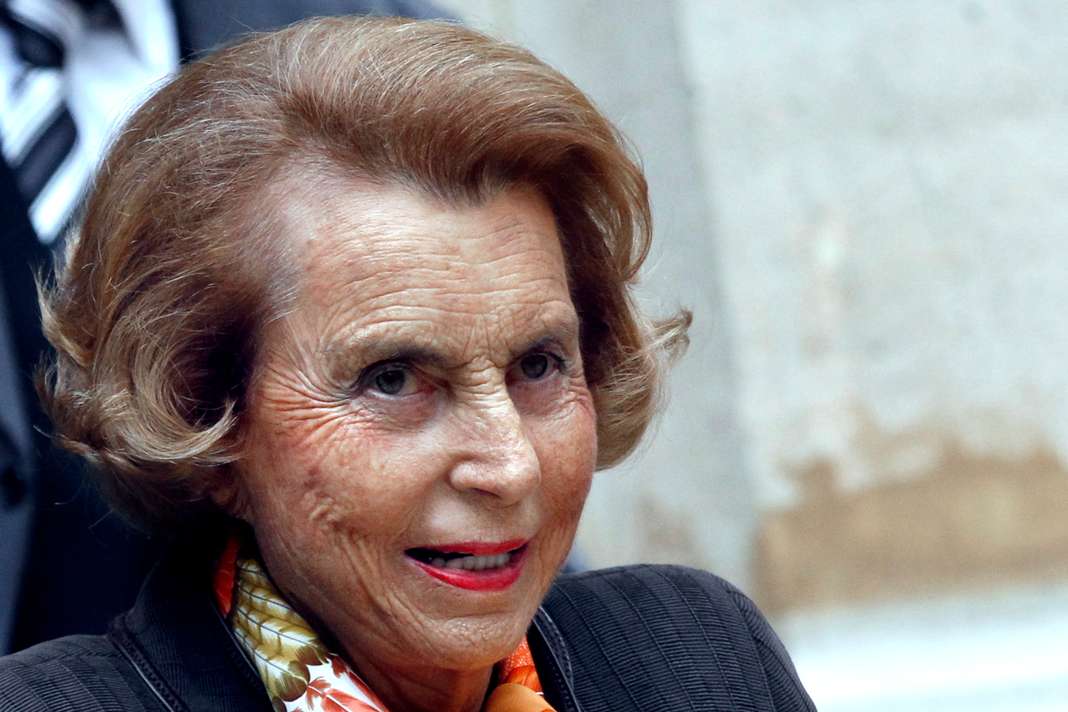
 I just learned of the death today of L'Oréal heiress Liliane Bettencourt, 94, the world's richest woman. According to her daughter, she "went peacefully." But the last 10 years of her life were anything but peaceful as she found herself at the center of an epic legal battle triggered by her daughter's 2007 suit against Liliane's protégé, artist François-Marie Banier, accused and eventually convicted of swindling the heiress out of part of her $40 billion fortune. A sad end to a long and eventful life. But also a liberation from the fog of Alzheimers and from the grip of her daughter's guardianship, which in effect held Liliane a prisoner in her gilded cage, forbidden to see even her closest friends. Proof, once again, that wealth does not guarantee happiness.
Showing posts with label François-Marie Banier. Show all posts
Showing posts with label François-Marie Banier. Show all posts
Thursday, September 21, 2017
R.I.P. LILIANE BETTENCOURT, 1922-2017
I just learned of the death today of L'Oréal heiress Liliane Bettencourt, 94, the world's richest woman. According to her daughter, she "went peacefully." But the last 10 years of her life were anything but peaceful as she found herself at the center of an epic legal battle triggered by her daughter's 2007 suit against Liliane's protégé, artist François-Marie Banier, accused and eventually convicted of swindling the heiress out of part of her $40 billion fortune. A sad end to a long and eventful life. But also a liberation from the fog of Alzheimers and from the grip of her daughter's guardianship, which in effect held Liliane a prisoner in her gilded cage, forbidden to see even her closest friends. Proof, once again, that wealth does not guarantee happiness.

Friday, August 25, 2017
NEW YORK TIMES REVIEW OF "BETTENCOURT"

BOOKS
‘The Bettencourt Affair,’ a Buffet for Scandal Aficionados
Books of The Times
By JANET MASLIN AUG. 23, 2017
 THE BETTENCOURT AFFAIR: The World’s Richest Woman and the Scandal
That Rocked Paris
THE BETTENCOURT AFFAIR: The World’s Richest Woman and the Scandal
That Rocked Paris
By Tom Sancton
396 pages. Dutton. $28.
The labyrinthine mess known as the Bettencourt affair has been
the stuff of scandal aficionado dreams. It has turned up repeatedly in Vanity
Fair, which would have had to make it up if it hadn’t happened. Here is Liliane
Bettencourt, the L’Oréal cosmetics heiress and richest woman in Europe,
surrounded by the onetime “Golden Boy of Paris,” eavesdropping servants,
bilkers of every stripe, vicious family warfare, fabulous ostentation, alleged
Nazis in the family tree and political corruption at France’s highest levels.
Celebrities, artists, estates, jewels, sailboats and one private island dot the
perimeter of her story.
The intrigue and implications that
arose from Bettencourt’s relationship with a younger man created a publicity
nightmare for nearly a decade. Coincidentally or not, L’Oréal’s business has
improved during that period of time.
“The Bettencourt Affair” is a
chronicle by the journalist Tom Sancton, who covered the story for Vanity
Fair. Sancton is no Dominick Dunne, who would have found the beating heart of
this thing, if there was one. (Questionable.) He’s more the type to call it
“‘Dallas,’ ‘Downton Abbey’ and ‘House of Cards’ rolled into one.”
So Sancton lacks a gift for dish.
But he is an excellent straight-up reporter, and he has dug deeply into the
many, many elements that complicate this story. One lawyer involved even needs
a lawyer by the time it’s over. This book gives him the space to go beyond the
Bettencourt-for-Beginners version, which is this: To the ultimate dismay of
Françoise Bettencourt-Meyers, her only child, Liliane Bettencourt became
infatuated with François-Marie Banier, a man 25 years her junior. Banier had
been a pretty, skilled charmer of older people since he was the teenage darling
of Salvador Dalí.
Over time, Bettencourt expressed
her affection by giving her platonic friend upward of a billion dollars’ worth
of assets. She made him the beneficiary of four separate life insurance
policies. Bettencourt-Meyers cried foul when she learned that her mother
planned to adopt Banier and make him an heir. At that point, the once-discreet
family lawyered up and went very public, with Bettencourt’s competence
questioned and Banier accused of “abuse of weakness” in a 2007 lawsuit. The
mother-daughter loathing, a long-held secret, came out in the open. “The mother
massacred the daughter, then the daughter massacred the mother,” one of the
many lawyers in this multidefendant story told Sancton.
From the butler who spent one year
secretly taping how Bettencourt was manipulated to the daughter’s efforts to
make witnesses her friends, there’s a lot to pursue here. One of the most
interesting parts of Sancton’s book is its history of L’Oréal, which began as
the first French company to produce hair dye that did not contain lead. The
formula was invented by Bettencourt’s father, Eugène Schueller, who also had
gifts for manufacturing and marketing. In 1909, he founded the French Company
of Inoffensive Hair Dyes (the translations here can be wonderful), which he
soon renamed L’Oréal.
Later came the buildup to World
War II, and a part of the family’s history that lay buried for years. L’Oréal’s
sales nearly quadrupled during the war, and Schueller was involved with a
company that sold paint and varnish — which were more necessary in Germany than
in occupied France. (“No tank rolls without paint,” Sancton writes.)
Schueller’s Vichy-friendly politics and alleged collaboration would come back
to bite L’Oréal decades later. Bettencourt’s husband, André, wrote expressly
pro-Nazi articles before joining the resistance.
In Sancton’s telling, there are no
sympathetic figures in this family. Bettencourt’s only appeal for others
appears to be her money, and she seems to have been an ice-cold parent. As to
how she could sound, here she is in a 1987 interview: “A rich woman, the term
itself is disagreeable. It’s an ugly word. I prefer fortune.”
The book’s portrait of Banier is
much more confusing. Nothing about his self-justifying has much credence.
According to him, Bettencourt first began sponsoring him when she visited his
apartment and said: “François-Marie, you need more space. You like fine things;
me too. I have the means to suit your tastes.” She then bought him the first of
assorted apartments that would be followed by a laundry list of other
valuables, including an island in the Seychelles that he claimed to disdain —
and that she forgot about as her mind grew foggier. He says he accepted all
this only to make her happy.
For most of the book, Sancton
makes Banier sound like a pure social climber. But suddenly, near the end, he
begins to celebrate the man’s protean talents. Banier has appeared in films by
Eric Rohmer and Robert Bresson. He has written a number of novels and published
many photography books, though most were sponsored by L’Oréal. He was a skilled
celebrity photographer who knew everybody who was anybody, and is certainly
good at dropping their names. “Princess Caroline told me this is the most
beautiful house in the South of France,” he told Sancton, when the author
visited him in Provence.
Sancton’s account leaves Banier in
2016, through with his ordeal and not too much the worse for wear. He was
sentenced to four years in prison, but got out of serving any time in a
follow-up judgment. He likes fame, though he insists otherwise. This book may
give him another shot at it.
A version of this review appears
in print on August 24, 2017, on Page C1 of the New York edition with the
headline: A Scandal Buffet For Aficionados. © 2017 The New York Times Company
To buy THE BETTENCOURT AFFAIR:
Saturday, August 12, 2017
NPR REVIEW OF THE BETTENCOURT AFFAIR
One of my favorite reviews so far! NPR's Nina Martyris really did her homework and really "got" it.

A former Time Paris bureau chief, Tom Sancton is perfectly placed to document this extraordinary story and the haute Parisian power milieu in which it is embedded.
By Nina Martyris
August 12, 2017
Liliane Bettencourt, the beautiful heiress to the L'Oréal cosmetics empire and richest
woman in the world, had everything. But she was also bored stiff. Enter François- Marie Banier, a handsome, talented, brazen, witty, gay novelist and photographer, an aesthete known to have a way with older women.
Emotionally and fiscally, their interests dovetailed: Banier opened up the stimulating art world to Bettencourt by escorting her to galleries, introducing her to his bohemian friends, reading aloud to her from Stendhal's Charterhouse, and being thrillingly irreverent in denouncing the giant Monet in her mansion as "hideous." Entranced, she lavished him with money and gifts, including paintings by Picasso and Matisse, apartments, and millions in life-insurance policies. For 25 years, Bettencourt played the generous Galatea to Banier's Pygmalion, with the total of her largesse teetering to an incredible one billion euros.
In 2007, Bettencourt's only child, her daughter Françoise Bettencourt Meyers, filed a criminal suit against Banier for abus de faiblesse (abuse of weakness), claiming that this "Rasputin" had ruthlessly exploited her then 84-year-old mother's oncoming dementia. Meyers, a quiet woman described by a friend as "an austere Carmelite nun," says her hand was forced when an eavesdropping chambermaid told her she had heard Banier asking to be adopted by Bettencourt.
The scandal, which electrified France for a decade, came to be known as the Bettencourt Affair.
The Bettencourt Affair is also the title of Tom Sancton's riveting page-turner chronicling this sweeping Tolstoyan saga. What started as a deeply personal mother- daughter drama spiraled into a colossal political scandal — L'Oréal is, after all, one of France's corporate crown jewels — that consumed and destroyed the presidency of "bling bling" Nicolas Sarkozy. In an unforeseen twist, secret tape recordings made by the Bettencourt butler – who hated Banier – revealed damaging conversations about illegal donations in the tens of thousands made by the Bettencourts to Sarkozy's campaign. As the scandal billowed and the Bettencourts' secret Swiss bank accounts and influence peddling came to light, detractors dug up the company's ugly past: how its founder, Bettencourt's father, had prospered under Nazi occupation, and how Bettencourt's husband André had authored several virulent anti-Semitic articles during the war. As Sancton dryly observes, "There was no dye that could hide the family's dark roots."
A former Time Paris bureau chief, Sancton is perfectly placed to document this extraordinary story and the haute Parisian power milieu in which it is embedded. In gripping but unsensational prose, he brings the debacle alive in its many dimensions, recreating not merely the lurid courtroom drama, but capturing "the ineffable sadness at its heart." He has an unerring journalistic eye for the telling vignette, evident in moments like Bettencourt happily showing off her tango footwork at a pastry salon in Buenos Aires, where she had travelled to visit an exhibition of Banier's work. Yes, she had bankrolled the exhibition, but in that carefree tango moment, she was a long way from the airless corporate world of L'Oreal. "I don't like blandness," she said in a rare interview. "I like salt." Banier was that salt.
Judiciously, Sancton doesn't take sides, restricting himself to perceptive observations about the Freudian motivations driving the dramatis personae of this family battle. Bettencourt comes across as a willful and lonely billionaire, but Sancton takes care to point out that profligate though her gift-giving might seem, she was, at least in the initial years of the friendship, hardly a batty old woman being preyed on by a sophisticated wolf. She had taken care to guard the family legacy by setting up a trust whereby her daughter and grandsons would receive almost all her L'Oréal stock upon her death. The rest of her money, she said fiercely, was hers to do with as she pleased.
Sancton describes Meyers as the awkward, studious, homebody daughter (she has written books on the Bible and Greek mythology) who has a frosty relationship with her mother and resents the dynamic interloper Banier. Of the three, she is the most inscrutable. Banier, whom Sancton interviews at length, is as brash and magnetic as "a character out of a Balzac novel." The child of an abusive father and utterly indifferent mother, he has spent his whole adult life forming deep and needy relationships with famous people like Salvador Dali, Vladimir Horowitz and Johnny Depp.
Today, Bettencourt, 94, is in the grips of Alzheimer's. Banier, found guilty, continues to work but is a "broken and wounded man." Meyers emerged victorious but faces serious charges of bribing a witness. In any case, as Sancton points out, years of mud-slinging, bitterness and airing of tawdry political secrets has ensured there are no winners. The Bettencourt affair has effectively made nonsense of the family's cherished motto, "live happy, live hidden."

Friday, August 11, 2017
INTERVIEW ON PARIS-EXPAT.COM
Paris maven Terrance Gelenter recently interviewed me for his popular literary/cultural blog paris-expat.com:

 TS: L’Oréal is considered a “fleuron” of French
industry—that is, a kind of flagship company that is important not just
economically but also in terms of national prestige. L’Oréal is not only a
major employer and tax contributor, but an emblem of France’s image as a fount
of luxury, elegance, refinement, and glamour. This is also true of the big
couture houses—YSL, Chanel, Dior, Cardin—and purveyors of luxury goods like
LVMH. But L’Oréal’s position as the world’s number one cosmetics firm gives it
an especially lofty status as a symbol of French prestige.
TS: L’Oréal is considered a “fleuron” of French
industry—that is, a kind of flagship company that is important not just
economically but also in terms of national prestige. L’Oréal is not only a
major employer and tax contributor, but an emblem of France’s image as a fount
of luxury, elegance, refinement, and glamour. This is also true of the big
couture houses—YSL, Chanel, Dior, Cardin—and purveyors of luxury goods like
LVMH. But L’Oréal’s position as the world’s number one cosmetics firm gives it
an especially lofty status as a symbol of French prestige.

TG:
Discuss the origins of L’Orèal and Eugene Schueller
 |
| Eugène Schueller at the helm of his yacht |
TS: Eugène Schueller, son of a baker and a domestic
servant, was kind of a Horatio Alger figure who transcended his humble roots to
attain a position of enormous wealth and power in France. Armed with a degree
in chemistry, in invented a synthetic hair dye that gave birth to L’Oréal in
1909. The company prospered, expanded overseas, and eventually became the
world’s number one cosmetics group. In addition to his brilliance as a chemist
and entrepreneur, though, Schueller nursed far-right political views and
financed one of the most notorious pro-fascist movements, La Cagoule, in the
1930s. He continued to support pro-German groups during Word War II, and actively
collaborated with the Nazi occupiers. His wealth and connections allowed him to
escape conviction in the post-war “épuration” trials, but as I document in my
book, Schueller was not just an economic collaborator but a political supporter
and informant of German security officials. After the war, he recruited a
number of French collaborators and Nazi sympathizers into the ranks of L’Oréal,
a fact that caused the company great embarrassment with it was revealed in the
1990s.
TG:
What is the significance of L’Orèal and other marquee brands to France’s image
and economy?
 TS: L’Oréal is considered a “fleuron” of French
industry—that is, a kind of flagship company that is important not just
economically but also in terms of national prestige. L’Oréal is not only a
major employer and tax contributor, but an emblem of France’s image as a fount
of luxury, elegance, refinement, and glamour. This is also true of the big
couture houses—YSL, Chanel, Dior, Cardin—and purveyors of luxury goods like
LVMH. But L’Oréal’s position as the world’s number one cosmetics firm gives it
an especially lofty status as a symbol of French prestige.
TS: L’Oréal is considered a “fleuron” of French
industry—that is, a kind of flagship company that is important not just
economically but also in terms of national prestige. L’Oréal is not only a
major employer and tax contributor, but an emblem of France’s image as a fount
of luxury, elegance, refinement, and glamour. This is also true of the big
couture houses—YSL, Chanel, Dior, Cardin—and purveyors of luxury goods like
LVMH. But L’Oréal’s position as the world’s number one cosmetics firm gives it
an especially lofty status as a symbol of French prestige.
TG:
You explore several issues in your book that need to be explained to American
audiences.
•
French political campaign financing and the way that politicians circumvent it
•
French inheritance laws and the legal system that applies-no trial by jury
TS: French laws governing political financing are much
more restrictive than U.S. laws. In the U.S, the existence of PACs and the Citizens
United decision means, in effect, that there are no real limits on political
funding. This is why the U.S. has the most expensive political campaigns in the
world, and why major donors like Sheldon Adelson and the Koch brothers have an
obscenely disproportionate weight in our electoral system. In France,
individual contributions to political campaigns are currently limited to €7,500
($8,800) per candidate per election, and companies are forbidden to make
political donations. To circumvent these limits, French parties and politicians
have historically resorted to a variety of illegal methods, including kickbacks
on public works contracts, channeling money through cutout companies, and
undeclared cash payments by donors like André Bettencourt. Bettencourt was a well-known
and much solicited source of illegal political financing, which explains why he
was given numerous cabinet positions over the years.
As for the French inheritance laws, they are still
rooted in the Napoleonic Code. French law requires parents to leave an
incompressible proportion of their estate to their children. In the case of an
only child like Françoise Bettencourt Meyers, that portion is 50%. The
remainder of the estate, known as the quotité
disponible, may be left to anyone. In fact, Liliane Bettencourt had already
bequeathed 92% of her estate to her daughter in 1992, so there was no legal
barrier to her giving the rest to François-Marie Banier if she so chose. The
daughter’s legal challenge was not based on inheritance laws but on her claim
that Banier had taken advantage of Liliane’s declining mental powers. The suit
was tried before a panel of three judges, since jury trials are only used in
the case of violent crimes in France.
TG:
Discuss the young Liliane, her marriage to André Bettencourt, her relationship
with her daughter Françoise Bettencourt Myers and ultimately her relationship
with François-Marie Banier.
 |
| Liliane, André, Françoise, 1988 |
TS: Liliane’s mother died when she was five. She was
raised by her father, Eugène Schueller, whom she idolized almost to the point
of obsession. In 1950, she married André Bettencourt, scion of a respected
family from Normandy. Schueller had actively encouraged the marriage, but it
was far from a perfect match for Liliane. A closet homosexual, and a mediocre
man with no diplomas of any kind, André busied himself with a political career
funded by his wife’s money. Meanwhile, Liliane had a difficult relationship
with her introverted daughter, Françoise, more interested in her books and her
piano than the active social life Liliane wanted her to lead. For all her
wealth, Liliane was bored, lonely, and depressed. When Banier entered her life
in 1987, he opened the doors to a whole new, exciting world of art exhibits,
theater, museums, witty conversation, glittering company. She fell in love with
him—though it was a platonic affair given Banier’s sexual orientation and the
25-year age gap between them. As their relationship developed, she began to
shower him with artworks, cash, real estate, life insurance policies totaling,
on paper at least, nearly a billion euros. She justified all this as patronage
meant to fund Banier’s artistic career as a photographer, writer, and painter.
 |
| François-Marie Banier and Liliane Bettencourt |
Banier encouraged and accepted her extraordinary
largesse, but he also had a genuine affection for her. Theirs was a complex
relationship, but it would be mistake to reduce the whole thing to a cynical
manipulation by a self-serving gigolo. Did Banier take advantage of their
relationship for material gain? Undoubtedly. But I’m convinced that Liliane was
a willing and knowing benefactor. The amounts involved seem mind-boggling to
ordinary folk—myself included. But bear in mind that what she gave Banier was a
tiny fraction of her overall fortune, and a fraction of the company stock she
has already willed to her daughter.
TG:
At the end of the day, although the alleged witness tampering by Françoise is
yet to be adjudicated, what is the impact of L’Affaire Bettencourt?
TS: The scandal has definitely tarnished the image of
the Bettencourt family in public opinion. Before it erupted, the Bettencourts
lived discreetly, scrupulously avoiding the media spotlight. The suit launched
by Liliane’s daughter in 2007 suddenly exposed the whole family to the harsh
glare of public scrutiny. All the dirty laundry came out in the press—Liliane’s
father’s murky past as a suspected Nazi collaborator, L’Oréal’s postwar
infiltration by ex-Nazi sympathizers, André Bettencourt’s anti-Semitic wartime
articles, Liliane’s health problems and creeping dementia, Françoise’s jealousy
of Banier and resentment of her mother, secret Swiss bank accounts and tax
evasion schemes, and of course the torrent of L’Oréal dividends that Liliane showered
on Banier. Today, André is dead, Liliane lives in the fog of senility, and
Françoise is under investigation for allegedly bribing a witness. Not much
glory in all that for the once proud Bettencourts.
As for Banier, it is true that he will face no prison
time and, on appeal, managed to avoid a ruinous fine. But he must live with the
fact that he was found guilty in court of abusing the weakness of Liliane
Bettencourt—he is a convicted felon. The case poisoned ten years of his life,
cost him millions in legal fees, and gravely damaged his reputation. Today, 70
years old, he continues to work and enjoy a comfortable material life, thanks
to Liliane’s millions. But he is in many ways a wounded, disgraced, and broken
man.
 |
| Ex-Presdent Nicolas Sarkozy |
Another victim of the Bettencourt Affair, at least
indirectly, is Nicolas Sarkozy. At one point, he was put under formal
investigation for allegedly accepting illegal campaign funds from the
Bettencourts. Though those charges were dropped, the former president remains
under investigation in a related case. Along with numerous other legal and
political embroilments, the Bettencourt Affair contributed to his failed
re-election bid in 2012 and his unsuccessful comeback attempt this year.
If there is a lesson in all this, perhaps it’s that we
should not envy the super-wealthy. Their riches often bring more problems than
they solve. This affair always reminds me of the opening line to Tolstoy’s Anna
Karenina: “All happy families are alike. Each unhappy family is unhappy in its
own way.”
Thursday, August 10, 2017
AMAZON NAMES BETTENCOURT AFFAIR #1 HISTORY PICK FOR AUGUST!
The Best History Books of August
Chris Schluep
August 9, 2017
NUMBER 1
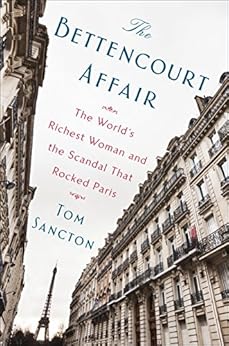
The Bettencourt Affair could stand as fiction. But it's real. And this is not some faraway scandal from another time--it's a story and a trial that has kept the French public rapt. The affair involves 94-year-old Liliane Bettencourt, heiress to the nearly forty-billion-dollar L’Oréal fortune. She's the world’s richest woman and the fourteenth wealthiest person. And she has a past that involves an expensive infatuation with a man who is not her husband, a tangled web of hidden secrets, divided loyalties, frayed relationships, and fractured families. All set in Paris.
http://www.omnivoracious.com/2017/08/the-best-history-books-august-amazon-book-review.html?linkId=40783293
Wednesday, August 9, 2017
PRINCESS MEETS HEIRESS IN THIS PARADE.COM INTERVIEW
 In Princess
Diana's Death and the Bettencourt Affair, Truth Is Stranger Than Fiction
In Princess
Diana's Death and the Bettencourt Affair, Truth Is Stranger Than Fiction By Becky Hughes
August 8, 2017
The Bettencourt affair may be one of the wildest high-society scandals of all time, but few Americans know it by name. Tom Sancton, author of new page-turner The Bettencourt Affair (Dutton), first broke the story in the U.S. for Vanity Fair in 2010, uncovering this Parisian intrigue involving Liliane Bettencourt, the world’s richest woman and heiress to the enormous L’Oréal fortune, and François-Marie Banier, a charismatic artist, and the legal battle that ensued after Banier received hundreds of millions of dollars in gifts from the aging heiress.
 The Bettencourt Affair is not Sancton’s first foray into the world of celebrity scandal. After Princess Diana‘s tragic death in 1997, Sancton co-authored Death of a Princess, a deep journalistic dive to find the true story behind the circumstances of Diana’s death. To commemorate the 20th anniversary of the fatal crash, Sancton and co-author Scott MacLeod have updated Death of a Princess with all the latest information on the tragedy and its effects on the royal family today.
Parade caught up with Sancton to discuss the devastating loss of Princess Diana and the sensational story of the Bettencourt affair.
Twenty years after her death, what is Princess Diana’s legacy?
She’s kept this amazing aura she had—the queen of hearts, this very special person who was beautiful and photogenic and cultivated the press, when it suited her, and was fascinating for a number of reasons. I think the fact that she died young under those circumstances has projected her into some kind of special status. People who die young, like John F. Kennedy and James Dean, we’ll always think of them as the exceptional, young, charismatic people that they were when they left us.
How has Diana’s death affected the royal family today?
It was a terribly traumatic event. And the way that the royal family handled it, especially the queen, was very much criticized at the time. [The queen] didn’t really show, publicly anyway, the kind of grief and emotion and respect that people expected her to at the time, and I think she tried to make up for that, but it was an event that the royal family had a lot of trouble dealing with on many levels. It was certainly traumatic for the young princes, and for Prince Charles as well.
It was an unexpected and devastating human event that exploded in the middle of this family. They’re human beings, but they’re much more than that. They’re symbols, they’re monarchs, they represent the state. But on the human level, they were very much affected, and to some extent destabilized by it.
There are so many rumors and conspiracy theories still out there today. What do you think really happened that night?
Scott MacLeod and I examined every possible conspiracy theory that was written about or circulating on the internet or in any number of published books and articles. We came to the conclusion that it wasn’t a conspiracy. I think you can very easily explain, if you look at the circumstances, that a drugged and drunk driver, driving too fast to escape the pursuing paparazzi, just lost control of the car in the tunnel.
It’s a traffic accident that took place under unusual circumstances—but, nonetheless, a traffic accident. You don’t have to look too far for an explanation when you look at the state the driver was in. In our book, we laid out many other scenarios, conspiracy scenarios, and analyzed them and pursued them as far as we could. Basically, at the end of the day, we didn’t really buy into any of them.
Has any new information come out since you first wrote the book?
A lot has happened, because the book came out very quickly, just a few months after the accident. At that point the French investigation was still going on. And then it was followed by a very thorough British inquest. Both the French and the English concluded that there was no conspiracy. As far as the paparazzi goes, they were a contributing factor in the accident—but they were not held criminally responsible. In legal terms, the person held responsible was the driver who, unfortunately, was killed instantly in the accident.
And then there were other things that came out in subsequent years. It appears from forensic evidence that there was a second car, presumed to be a Fiat Uno, considered by many to have collided with the Mercedes that was used to drive Dodi Fayed and Princess Diana. The French investigators looked at thousands and thousands of cars, and there was one Fiat Uno that appeared to have been in an accident, to have been repainted, that matched descriptions by certain eyewitnesses.
And there were a number of different findings concerning different paparazzi who were in the tunnel or who were considered to have been part of that pursuit who were never actually apprehended or investigated, and so there was some speculation that some of them could have been involved in a conspiracy.
Your new book, The Bettencourt Affair, is about a more recent French scandal involving the family behind L’Oréal. Can you explain it for people who are unfamiliar with the story?
This legal case was an absolute obsession in France for years. What really got people’s attention was the characters involved—Liliane Bettencourt, the world’s richest woman, and this much younger, gay, kind of flamboyant, charming, boyish artist, François-Marie Banier, who received hundreds of millions of dollars from her over the years in gifts.
Then Bettencourt’s daughter [Françoise] sued Banier for elder abuse. Françoise and her mother, Liliane, had a terrible relationship, and Francoise decided in 2007, after her father died, to launch this suit against Banier.
Banier was not a household name by any means, but he had written three best-selling novels by the time he was 25. He was somebody who had had very close relationships with some very famous and accomplished, wealthy people, ranging from Salvador Dali to Vladimir Horowitz, Johnny Depp, dozens and dozens of very influential people. One of the intriguing things about the book and about his story is, who is this guy? How did he manage to charm and manipulate and fascinate so many important people?
You interviewed Banier in person. What did you learn about him?
He’s self-interested, he’s very self-centered, he’s materialistic—there are sides of him that are not necessarily that admirable. But on the other hand, he is a fascinating conversationalist. He’s a workaholic, he goes out and does street photography every morning. In the afternoons, he works on his novels. He works 16, 18 hours a day.
The thing that struck me most was how aggrieved he was at this whole thing. His take on it is, look, Liliane Bettencourt was lonely, she was bored, she was depressed, and I came along and opened the doors to this exciting worl
d of art galleries and auctions and travel and theater, and I introduced her to some fascinating people and saved her life.
And she actually said this many times in writing, in letters to her lawyers. So Banier considers that his role was a very positive, almost altruistic role, and that it was normal that she gave him what she felt like giving him. If you total up what he got, it was just a tiny, tiny fraction of her fortune. She was in love with him, in a platonic way.
But Liliane and Banier are no longer in contact?
In 2010, her lawyers and her family almost sequestered her away from him. Every time he tried to call her house or contact her, he’d be told by domestic servants that she wasn’t available, and finally he realized that he wouldn’t be able to see her anymore.
And now Liliane’s daughter is under investigation for witness tampering.
It would be a horrible irony, really, if the person who launched this whole legal battle wound up the final victim. This is the final act of this very complicated legal battle. What Françoise did, basically, was give 700,000 euros to her star witness, former accountant of the Bettencourt family.
I think it’s very unlikely that she would be sent to jail, though that particular crime has a maximum three-year prison sentence and a 45,000-euro fine. The fine she could pay out of her pocket change, that’s no problem.
What do you want readers to take away from The Bettencourt Affair?
The book is really a saga; it’s not just a legal battle. It’s about three generations of this very wealthy family and what’s become of them today. The lesson I come back to is very simple: Money doesn’t buy happiness. It’s not a guarantee of happiness, of personal success, or even invulnerability to things like this suit.
Subscribe to:
Posts (Atom)