This is an open-ended blog ranging from news about my latest gigs and publications
to ruminations about politics, world affairs, culture and whatever piques my interest—or ire.
Contact: tomsancton@yahoo.com
Showing posts with label paris. Show all posts

Monday, July 10, 2017

DEATH OF PRINCESS DIANA REVISITED: HOW WE GOT THE STORY


On August 31, 1997, just after midnight, a black Mercedes bearing Princess Diana and her lover Dodi Fayed struck the 13th pillar of Paris's Alma tunnel, spun around, and crashed into a concrete wall. Within minutes, I was awakened by an urgent call from TIME's news desk in New York. As the magazine's Paris Bureau Chief, I was responsible for our coverage of this stunning event.
     My fellow correspondent Scott MacLeod, who lived just across the Seine from the crash site, was already standing outside the blocked off Alma tunnel, notebook in hand, interviewing eyewitnesses even as French medics worked desperately to save Diana's life and extract her from the crumpled wreck. (It was already too late for Dodi and driver Henri Paul: both had died instantly.)
     Meanwhile, I worked the phones and followed live TV coverage from my suburban home in Le Vesinet. Like millions of people around the world, I was shocked and saddened by the news bulletin that Diana had died on an emergency room operating table at 4:00 a.m. Working well past dawn, Scott and I filed our reports to New York, caught a few hours sleep, then headed into the TIME bureau just off the Champs-Elysées to plan our continuing coverage of the event and its aftermath.
     The Diana story was our unique focus for the next three weeks, as the magazine probed the background of the accident, the role of the pursuing paparazzi, and the conspiracy theories that began to circulate almost immediately after the accident. Along with our colleagues in the U.K., and a team of writers and editors in New York, Scott and I contributed to no fewer than three successive cover stories on Diana's death. Circumstances had put us at the epicenter of this event and the reporting we accumulated over those three weeks had made us some of the most knowledgable observers outside the French police investigators.
     It was at that point that, with the encouragement of super-agent Andrew Wylie, Scott and I proposed to do a book on what was then the hottest subject in the news business. To our amazement, Andrew sold it in 14 countries within a week or so. That was the good news. The bad news was that the publishers wanted the first half of the book by the end of November and the rest by December 15. Less than two months from our signing date. We both took leaves of absence from TIME and plunged into what remains the most daunting assignment of our careers. The result was DEATH OF A PRINCESS, which became a New York Times and international bestseller.
     This year, for the 20th anniversary of Diana's tragic end, my publisher, Dutton, asked us to prepare a revised and updated edition. Again there was only a short time available for this job, but journalists live by deadlines and this one was more manageable than the week-to-week rhythm we'd had to deal with on the magazine. There was relatively little to change in the main body of the book, but bringing the story up to date meant delving into the results of the French investigation, and the subsequent British inquest, and tracing the lives of the various protagonists—Prince Charles and his sons, Mohamed al-Fayed, the paparazzi, et al.—in the years since 1997. The result is now available on Amazon and iBooks. Anyone interested in this dramatic and historic story should click on those links now: we don't plan to do a 40th anniversary edition!

To buy the e-book edition of Death of a Princess, click on the links below:

Amazon 

iBooks


Monday, May 29, 2017

KIRKUS REVIEW OF MY NEW BOOK


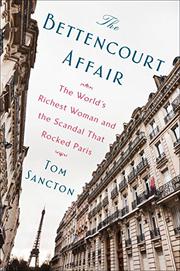
THE BETTENCOURT AFFAIR

The World's Richest Woman and the Scandal that Rocked Paris
BUY NOW FROM


                            THE BETTENCOURT AFFAIR by Tom SanctonA juicy chronicle of France’s richest scandal.

As the daughter of L’Oréal founder Eugène Schueller, Liliane Bettencourt (b. 1922) is the wealthiest woman in the world—wealthy enough, in fact, to have lost nearly 25 million euros in Bernie Madoff’s scheme. While former Time Paris bureau chief Sancton (Song for My Fathers, 2010, etc.) tells the story of Bettencourt’s daughter’s suit against Liliane’s dear friend François-Marie Banier, he also provides an eye-opening look into the French judicial system. Based on Napoleonic code, it is a system that seems made to delay final decisions as cases wend their ways through the different court systems. Françoise Meyers brought the case against Banier for abus de faiblesse, or exploitation of weakness, in 2007, just after the onset of Liliane’s mental confusion. Françoise was a talented author and musician but never pleased Liliane. Her mother, nearly deaf, enjoyed Banier’s company and was uncharacteristically generous to him. She financed his artistic activities and gave him real estate and financial contracts for millions, not to mention the occasional check for 100,000 or 200,000 euros. Her gifts were extremely lavish, by some estimates totaling over 1 billion euros, considerable for a woman well known as a penny pincher. Banier was already a successful artist and photographer when he met Liliane, but he was also an abused child always searching for a replacement mother. What he gave her was liberation from the formal life she led. He was handsome, quirky, and a great conversationalist. Her husband, André, was warned about her gifts, but he decreed that it was her money to do with as she pleased, a stance that echoed the attitudes of her financial advisers and notary at first. André served in successive governments, due for the most part not to talent but to small brown envelopes handed to candidates.
A well-researched, crisply written, and entertaining story of family, greed, wealth, and the complex relations among them.

Saturday, September 7, 2013

TORTURE IN THE MARKETPLACE: A French funny hat band massacres "All of Me"


"Whenever  you feel like criticizing anyone...just remember that all people in this world haven't had the advantages you've had." That was the advice Nick Carraway's father gave him in The Great Gatsby. It's a wise observation and I generally try to abide by it. So I'm not going to make fun of these guys I encountered at an open-air market near Paris this morning. Honest. They seemed to be having a good time and no one was hurt. I looked on with good-natured amusement, captured the moment on my cheap cell phone, and present it here in hopes that it brightens your day.

Friday, August 23, 2013

A WALK THROUGH MULTICULTURAL PARIS


The French novelist and poet Victor Hugo once wrote that "Paris is the capital city of every educated man." The African-American singer and dancer Josephine Baker proclaimed "I have two loves, my country and Paris." Ever since the French Revolution, Paris has been a magnet and a refuge for foreigners rich and poor. Since the independence movements of the 1950's and 60's, natives of the former French colonies in Africa, Indochina, and the West Indies have flocked to Paris and other French cities in search of work, social benefits, and a better life than they left behind. As a result, some 11% of the French population is now of immigrant origin. Paris has become a cosmopolitan city with an ethnic mix that frightens some—witness the rise of the far-right, anti-immigrant Front National party (20% in the polls)—but strikes others as as a source of cultural richness. Sylvaine and I observed this fascinating human patchwork on a recent trek from the Buttes Chaumont park in the east of the capital to the Gare de l'Est in the center (see map). Along this promenade, Sylvaine snapped pictures as part of a photo project showing various aspects of Paris. Highlights:


Belleville, located on a hill south of the Buttes Chaumont park, dates back to the 16th century and was incorporated into Paris only in 1860. In the 19th century, it was such a source of working-class ferment that the Baron Haussmann, who redrew the map of Paris under Napoleon III, drove the Boulevard de Belleville through its centre to allow for troop movements and buffer the bourgeois quarters from the revolutionary masses. Today, it is dominated by Arab and Asian immigrants whose languages and native dress give it a Third World tinge that contrasts sharply with the traditional French architecture. The southern part of Belleville, largely inhabited by Asians, is particularly striking with its ubiquitous Chinese and Korean ideograms emblazoned over shops selling everything from Peking duck and egg rolls to Chinese vegetables, computers and cell phones. Were it not for the view of the Eiffel Tower visible in the distance, it would be hard to guess that this bustling quarter was part of Paris.


Chateau d'Eau, near the Porte Saint Denis, is a transported slice of Africa. Black youths dressed in flat-billed baseball caps and hooded sweatshirts like American gangstas congregate on street corners and exchange rapid chatter in various indecipherable (to us) languages, while older immigrants in native dress stroll down the street with shopping bags or pushcarts, stopping to munch on ears of grilled corn sold by a sidewalk vendor who cooks them over open coals.


Place de la République, one of Paris's best-known landmarks, is a towering stone column encircled by haut-relief bronze plaques depicting various historic chapters in the march of French liberté, égalité, and fraternité from the storming of the Bastille prison in July 1789, to the proclamation of the Third Republic in September 1870. It is surrounded by a fountain and an immense open square where hundreds of people congregate on these hot summer days to sip coffee and beer at outdoor tables or cool off by wading in the fountain. Fittingly enough, the ethnic mix here is a snapshot of the modern French republic, from Français de souche (those with French roots), to Asians, Africans, Arabs and of course backpacking tourists from around the world. Unlike the feeling of separateness one gets in certain ethnic neighbourhoods, the atmosphere here is one of people coming together, or at least enjoying a peaceful coexistence. The illusion of the Front National xenophobes is that somehow the "foreigners"—most of whom are actually French citizens—can be sent home and France can reclaim its racial and cultural purity. Like it or not, these diverse ethnic communities are permanent strands of the modern French tapestry.


Tuesday, July 16, 2013

A MIDSUMMER'S UPDATE

Our arrival at our summer base in the Paris suburb of Saint Germain-en-Laye last month was greeted by a spate of cold rainy weather that the had persisted through much of the Spring. This caused widespread depression among the French (who are easily depressed anyway), though they shouldn't have been surprised. Springtime in Paris is a cruel myth; the season is most often chilly and soggy. Sylvaine and I were not that unhappy about the weather, since we had left New Orleans amid 95 degree heat and steam-bath humidity and found the fraîcheur a welcome relief—like having free air-conditioning inside and out. We even made some fires in our fireplace, which was cheery and cozy, although it was late June. The weather eventually warmed up—it’s in the 80s now, and the French are starting to complain about the heat. The upside of all this is that our garden is starting to explode with late-blooming flowers: roses, hollyhocks, wisteria, lavender... Sun sets late here this time of year, so we sit on our patio sipping cool drinks and listening to the birds sing until past 10 pm while the sprinkler waters our moss-infested lawn. 

Not that we haven’t been busy doing other things. Sylvaine set about repainting the guest room while I grabbed my clarinet and took off on a brief music tour. On July 1, I played at Switzerland’s Zofingen Jazz Festival with Dan Vernhettes’ Vintage Jazzmen and Gospel singer Denise Gordon. On July 4, I met up with my old friend Luciano Invernizzi for a dinner concert in Castello Colloredo, Italy. This picturesque village near the city of Udine boasts an ancient, crumbling castle and a restaurant with an upscale menu that belies its nondescript name of “La Taverna.”  We played in the Taverna's garden and enjoyed an exceptional meal of asparagus mousse and braised veal.
         
Next day I was off to Baden-Baden, where I linked up with drummer Trevor Richards, trumpeter Clive Wilson, bassist Bob Culverhouse, pianist Simon Holliday, and a terrific Scottish trombonist named Dave whose last name eludes me at the moment. For centuries, the historic German spa at Baden-Baden has been a playground for Europe’s royals, rich and over-privileged. The tradition continues today, though with more ostentatious vulgarity than old world elegance. As we dined at an outdoor curry restaurant near our hotel, we were treated to a display of in-your-face rolling stock that drove nonstop down the narrow cobblestone street: Audis, Mercedes convertibles, BMW roadsters, Ferraris, Porches. The town was crammed with upscale boutiques. Most of the people wandering around the streets sported Swiss watches, gold bracelets, and designer duds that underscored the Germans’ reputation for conspicuous consumption. The next day we played an open-air concert in the garden of the famous Kurhaus, the white-columned 19th-century edifice that houses the town’s casino. Five days after my return to France, I teamed up with bassist Enzo Mucci and guitarist Christophe Davot for a trio job at a jazz-café called the Gramophone in Marly-le-Roi. Next month I hit the road again for another Gospel set with Denise Gordon and the Vintage Jazzmen in Femø, Denmark August 1 and 2.

Last week, Sylvaine and I drove to the Normandy fishing town of Saint Valery-en-Caux, where the sun was out but a cold wind was blowing so hard we could hardly stand up. Swimming in the crashing surf was out of the question. So we headed further west and returned via Trouville, where we had a wonderful seafood luncheon on the terrace of the Hotel Central—an old favorite of ours—and sat on the sandy beach for a couple of hours reading (Faulkner for me, a French magazine for Sylvaine) and listening to the wind and waves. 


Shortly after our return to Saint Germain, we were joined by visitors from New Orleans: guitarist John Rankin and his wife Vitrice. We have spent the past few days showing them around Saint Germain and Paris, eating and drinking, playing music, and generally trying to make them jealous of the sybaritic French lifestyle. Our scheme seems to be working: they have plunged into their sightseeing adventure with cameras clicking and wallets emptying as they buy the tempting wares of the open-air markets, sip coffee and beer at the outdoor cafes and treat us to lunch at charming little plat-du-jour restaurants. Yesterday we took them around the Latin Quarter—the Sorbonne, Luxembourg Gardens, a superb Chagall exhibition, the 11th-century Saint Germain des Prés church, Saint Sulpice (where the albino monk killed the nun in The Da Vinci Code) et al. Today, they’re off on their own, guidebook and metro passes in hand. If they ever find their way back, we’ll have dinner in the garden and watch the sun set. It’s a tough life, but somebody has to live it.


Friday, August 19, 2011

THERE GOES THE NEIGHBORHOOD!

One of my all-time favorite restaurants in Paris has always been Chez Polidor, located in the Latin Quarter near the Luxemberg Gardens. I have been going there since my student days in the 1970s and have been returning ever since. The place was founded in 1828 and looks like it still has its original décor of pitted mirrors, framed prints, antique posters, high ceilings with elaborate moldings. On one wall, there are little drawers for the regulars to keep their personal napkins in. It has red and white checkerd tablecloths, long communal tables and a menu written on a big chalkboard. This is not a nouvelle cuisine or world food place; it features traditonal Parisian bistro fare—snails, beef bourguignon, onion soup, rabbit stew—at reasonable prices.
My wife always begged me not to tell any of my "foreign" friends about the place because it was a little-known treasure frequented almost exclusively by locals. Well I pretty much kept my word on that, but unfortunately Woody Allen did not. He (rightly) considered this place central casting's idea of an old-fashioned Parisian bistro and filmed a scene from his recent "Midnight in Paris" at Polidor. (This is the scene where the time-traveling American hero meets Ernest Hemingway over a bottle of red wine.) Since then, the place has gotten into all the guides, features a photo of Woody in the front window, and has been overrun by tourists. I tried to go there last night and was astounded to see a line outside consisting of whole American families in shorts and sandals, with kids no less, couples pushing baby carriages, Japanese tour groups with guidebooks in hand. I stuck my head in and heard no French being spoken. Call me a snob, elitist, misanthrope, whatever, but I won't be going back there. Thanks a lot, Woody! Oh well, I'm headed home soon anyway after a wonderful summer.

Friday, June 24, 2011

SUMMERING IN PARIS—GIGLIST SUSPENDED

No New Orleans gigs till August: we're in Paris for the summer. Planning to eat some great food, read the papers on my chaise longue [sic], stroll through the city, write a novel, practice the clarinet, and see a lot of films. That may be what I miss most about living in New Orleans: the absence of a decent movie house (except the Prytania) and the limited choice of good films. Here there are real cinemas all over the place and about 400 films on offer at any given time. The one we saw the other night was a winner: Woody Allen's "Midnight in Paris," a thoroughly entertaining fantasy about an incurable francophile romantic wandering through time in this magical city. Now that's a story I can identify with.
Stay tuned for more musings from Paris.

Friday, June 25, 2010

FETE DE LA MUSIQUE: BAD SOUNDS, GOOD FOOD


In these latitudes, June 21 is the longest day of the year. In France, it also marks the annual Fête de la Musique, when musical groups ranging from amateur guitar strummers to whole symphony orchestras and brass bands play all over town well into the wee hours of the morning. So my wife Sylvaine and I took the train from our suburb into Paris hoping to enjoy the festival, but most of what we heard was abominable.

Apparently it’s far cheaper for a restaurant or café to hire one D.J. with a trunkfull of electronic equipment than it is to hire a group of real musicians. So we were assailed with ear-splitting “techno,” an electronically produced cacophony based on breaking sound up into stroboscopic fragments, setting it to a machine-generated beat, then cranking it up as loud as possible. This is the kind of music kids dance to in discotheques while grooving on ecstasy. Admittedly, I have never done this—my generation just smoked grass and danced to the Rolling Stones—so perhaps I am clueless as to the real charm of techno. I get the impression it’s pretty much dépassé elsewhere, but the French are still into it and think it’s cool (they also think Jerry Lewis is cool). Last year, we heard Pierre Boulez direct the Orchestre National de Paris in a superb concert of Stravinsky under the Pyramid of the Louvre. The contrast between that and the techno D.J.’s was a striking comment on the decline of Western civilization. On the other hand, maybe we could have looked harder for some decent music.


Instead, we decided to have dinner in one of our favorite restaurants, the Epi d’Or, near the Louvre. Our links to the Epi d’Or go back to the mid -70s. Sylvaine used to go there when she worked on costumes and accessories at the Comédie Française theater, which is just a few blocks away. She and her fellow decorators would go there to celebrate after finishing their work on a new play. Sylvaine thought the place was wonderful and took me back there some time later.

And it was wonderful. L’Epi d’Or (“the golden shaft of wheat”) is one of the dozens of restaurants that surrounded the old central market, Les Halles. Since the Middle Ages, Les Halles had been the place where Parisian butchers, fishmongers and greengrocers procured their wares. Trucks would come there from all over Europe, and their drivers would wait while workers emptied their cargo and supervisors filled out the paperwork. To kill time, the drivers would hang out in local bars, visit the prostitutes that frequented the area (cf. the film “Irma La Douce”) or eat hearty meals in the late-night restaurants that surrounded the Halles pavilions, joining wholesalers, vendors, buyers and ordinary Parisians seeking out some colorful nightlife. L’Epi d’Or was one of these restaurants. Les Halles was closed down in the 1970s on orders of President Pompidou, who decided that having the wholesale food market in the middle of Paris caused too much traffic congestion. So the beautiful wrought iron and glass pavilions were demolished, the market activities were moved to the distant suburbs, and the empty space was turned into a garish underground shopping mall that is now a center for drug dealers and pickpockets.

The good news is that many of the traditional restaurants have remained, including l’Epi d’Or. When I first went there, the tile floors were covered with sawdust to soak up the blood dripping from the butchers’ smocks and the ashes from the vendors’ cigars and cigarettes. The waiters sported leather aprons, traditionally worn by workers in the meat market to prevent them from cutting out their own entrails, or worse, while wielding their razor sharp knives. The sawdust and leather aprons are gone now, but otherwise the place looks exactly as it did in the 1970s, and probably the 1870s for that matter.

The walls are covered with a dusty ocher fabric, many times painted over. The ceiling is the same dark mustard color, with a patina of smoke and a spattering of dark brown spots —perhaps the result of an exploding wine bottle a century or so ago. The spots were there the first time I ever entered the place and successive owners have had the good sense not to clean them off. They are part of the history of the restaurant, of Les Halles, of Paris. On the walls hang small paintings of rustic scenes, wheat fields, windmills. There are also some ancient wooden implements associated with wheat farming—a hand-carved pitchfork and a winnowing fan. On the left, on entering the room, there is a long zinc-covered bar. There are half dozen tables with starched white tablecloths and leather-cushioned benches along the walls. Another room in the back has four tables.

We were greeted by our usual waiter, Dominique, clad in the traditional style: black pants, white shirt with a black bow tie and a white apron. That used to be what waiters wore in every café and restaurant in Paris. Today, you see waiters (and waitresses) dressed in everything from trendy black shirts to polo shirts and even T-shirts. Not Dominique; he’s old-style. We have known him for about 20 years, but he never seems to age. In fact, his hair has become noticeably darker, going from brown in the old days to coal black today. Dominique, not at all surprised to see us after a year’s abence, gave us a choice table near the bar though we had no reservation. A few minutes later a couple without a reservation was turned away, so we felt privileged. (Maybe we were just lucky.)

The menu is traditional Paris bistro fare—the sort of hearty stuff that nourished the truckers and all-night Halles workers in the past. We started with a lobster salad (Sylvaine) and sautéed duck livers (me). The lobster salad consisted of one whole lobster tail on a bed of lettuce. This is not the oversized, butter-dripping Maine lobster we’re used to, but a smaller species, homard, that has a more delicate taste and consistency. My duck livers were just lightly sautéed with some balsamic vinegar. They were so soft and tender I could cut them with a fork and they almost melted in my mouth.

Surprisingly, considering all the bread we ate to soak up our sauce (considered de rigueur in France, not at all bad manners), we were still quite hungry when the main dishes arrived. Sylvaine had a navarin d’agneau, a slow-cooked shank of lamb, with green beans; I had a grilled barbue, a flat fish resembling a flounder but thicker and, to my mind, tastier. For dessert, Sylvaine had a clafoutis, a sort of flan with cherries, and I had a tarte tatin, an upside-down apple pie served warm with fresh cream. We topped it all off with a couple of expressos. By this time it was 11:20 pm, but the place was still full and more late night revelers were coming in the door. (We have trouble finding a New Orleans restaurant that will serve us after 9:30.)

As much as we enjoyed the food—actually, in France you “savor” food—I think our greatest pleasure came from revisiting a familiar place with long roots in our memories and seeing that everything remained the same. It seems to be a sad rule of life that when you really become attached to a restaurant, you can be sure that sooner or later, some idiot will decide to redecorate it, or “update” the menu, or change the chef, or sell the place, or a hurricane will destroy it, and it will never be the same. I have seen this happen to dozens of restaurants all around the world. And it happened to l’Epi d’Or.

When we visited Paris in the early 80s, after moving to New York a few years earlier, we were shocked. There was a new proprietor, and though he had the good sense not to touch the décor, he totally changed the menu and the food was mediocre at best. We resolved never to go back there. But when we moved back in 1992—I was sent over to run Time Magazine’s Paris Bureau—we decided to give it another try. To our surprise and delight, a new couple had bought the place and restored the Epi d’Or to its former glory. They kept the old look, but revived the Halles-style menu (with a few innovations) and hired a chef who knew what he was doing. We rejoiced over the phoenix-like revival of l’Epi d’Or and have eaten there regularly ever since. A good meal there can make up for a lot of bad music.