This is an open-ended blog ranging from news about my latest gigs and publications
to ruminations about politics, world affairs, culture and whatever piques my interest—or ire.
Contact: tomsancton@yahoo.com

Tuesday, August 8, 2017

DAY-ONE FOR THE BETTENCOURT AFFAIR


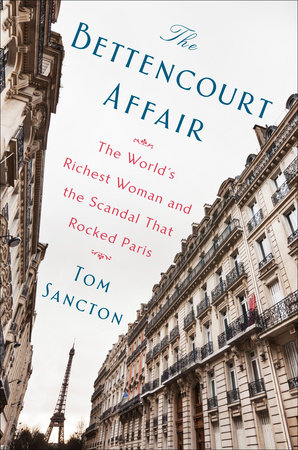
Today is the launch-date for The Bettencourt Affair, an exciting moment for me after two and a half years' work on the project. Pre-publication reviews have been positive, even enthusiastic, so I am optimistic about the book's life after birth. I am now in France casting about for a new book topic. I have a few ideas but have not settled on anything yet. It is not a choice to be taken lightly: researching and writing a book is a multi-year commitment. Erik Larson, one of my favorite nonfiction writers, says he spends two years on research and two years writing. That sounds about right, though I did Bettencourt in half that time and finished Death of a Princess in about eight weeks (granted I had a co-author, Scott MacLeod, but still). By those standards, four years sounds like a welcome luxury. Stay tuned...

Meanwhile, I have been gratified by the attention a number of literary bloggers have given to my new book. One of them, Deborah Kalb, just published this Q&A today to mark the launch date. Enjoy:


Photo © Sylvaine Sancton
Tom Sancton is the author of the new book The Bettencourt Affair: The World's Richest Woman and the Scandal That Rocked Paris. His other books include Death of a Princess and Song for My Fathers. A longtime Paris bureau chief for Time magazine, he also has written for publications including Fortune and Reader's Digest. He is a research professor at Tulane University.

Q: You note that you've been intrigued by this story since 2010. What first interested you about it, and at what point did you realize you'd be writing a book about it?

A: I spent the summer of 2010 in France, at a time when the Bettencourt Affair exploded into the headlines. I became fascinated by this story of the L’Oréal heiress and the fortune she gave to this photographer and writer, Banier, whom I had never heard of at the time.

The daughter’s elder-abuse suit against Banier had triggered a major legal battle whose repercussions went far beyond her original intent, and eventually ensnared the then President Nicolas Sarkozy in what the press was calling a “French Watergate.”

When Liliane Bettencourt’s butler taped her secret conversations with her financial advisers, the leaked recordings revealed a Pandora’s box of secrets—illegal Swiss bank accounts, tax evasion schemes, influence peddling by a French minister, the threat of a takeover of L’Oréal by its Swiss minority shareholder Nestlé, and on and on.

Then there was the fascinating character of Banier, this charming rogue of an artist who had written bestselling novels and befriended the likes of Salvador Dalì, Johnny Depp, and Yves Saint Laurent before linking up with Liliane.

I just said to myself, what a great yarn this is. I proposed an article to Vanity Fair, which was published in the fall of 2010. After that, I followed the mother-daughter legal battle from afar as it wended its way through the courts.

When it finally went to trial in early 2015, my agent, Katherine Flynn, suggested that I propose a book for the U.S. market. I thought the subject might be too “French” for American readers, but Katherine’s instincts were right on the money: she eventually had six publishers bidding on it.

Q: How did you research the book, and was there anything that particularly surprised you in the course of your research?

A: The research was extensive and varied. There were thousands of articles in the French press, and as of 2010 a half dozen French books on the subject.

I delved into the French national archives for documents on Eugène Schueller, Liliane’s father, and the founder of L’Oréal, who had been investigated as a Nazi collaborator after World War II.

Thanks to his money and influence, Schueller escaped conviction, but I found compromising documents showing he had actively collaborated as an informant for the German security services.

I did more than 60 interviews with principals in the case, their friends and associates, lawyers and judges, and fellow journalists who covered the story.

One of my greatest coups was getting my hands on the entire investigative file, not a public source by any means, and thus gaining access to literally thousands of depositions, documents, medical reports and legal briefs related to the case.

Included in that trove was an extensive correspondence between Liliane Bettencourt and François-Marie Banier, which gave me a privileged insight into their unusual friendship.

Finally, I was able to do extensive interviews with Banier and his close friends, which allowed me to see the “human face,” so to speak, of the multi-faceted character that many simply dismissed as a blood-sucking exploiter. There were many surprises along the way, but I was particularly struck by the complexity of Liliane’s relationship with Banier.

Q: How would you describe Liliane Bettencourt, and how would you characterize her relationships with her protege, Banier, and her daughter, Francoise?

A: Liliane was a woman whose childhood was shaped by her mother’s death when she was five, and by the domination of her father, whom she adored and admired to the point of obsession.

At her father’s urging, she married a man she didn’t love, André Bettencourt, a closet homosexual who devoted himself to a political career funded by Liliane’s money.

She had a fraught relationship with her only child, Françoise, a timid introvert more interested in her books and her piano than in the active social life Liliane wanted her to pursue.

As Liliane advanced in age, she was increasingly lonely, unfulfilled, and depressed—until she met François-Marie Banier.

This exuberant and seductive artist opened the doors onto a whole new life, charming her with his witty conversation, taking her to art galleries, museums, the theater, introducing her to all kinds of interesting people she never encountered in her conventional bourgeois world.

Liliane was smitten by him and by the exciting life he offered her. She showed her gratitude by showering money on him—always presented in terms of patronage to further his artistic career. There was apparently no physical intimacy between them—given Banier’s homosexuality and the 25-year age gap between them—but I would call their relationship a platonic love affair.

Those who imagined that Banier was just a cynical gigolo pumping money out of a batty old dame understand nothing about the relationship. He was hardly devoid of greed and self-interest, but he also had a genuine affection for Liliane.

To some extent she was a replacement for his own mother, who had neglected and mistreated him as a child. As I said, it was a complicated relationship—but fascinating.

Q: What impact has this saga had on France?

A: It certainly tarnished the image of the Bettencourts. Before the affair erupted, they lived discreetly and avoided publicity. The lawsuit exposed all their dirty laundry to the harsh glare of public opinion—Schueller’s collaboration, André’s wartime anti-Semitic articles, the family’s tax-evasion schemes, the illegal political payments, Liliane’s declining physical and mental health, Françoise’s blind jealousy of her mother.

And let’s not forget that Françoise herself is now under investigation for witness tampering. Not much glory in that for the once-proud Bettencourts.

The case also affected the political fortunes of Nicolas Sarkozy, whose 2012 re-election bid was compromised by the Bettencourt Affair and other legal embroilments.

Interestingly, though, the affair had no effect on L’Oréal’s fortunes, despite the negative publicity and the fears of a Swiss takeover. The company continued to post double-digit growth in spite of the 10-year legal battle that threatened to tear apart the founding family.

Q: What are you working on now?

A: I’m still casting around for the subject of my next book. I suspect it will be based on another scandalous French “affair.” French, because I live in France now and have spend most of my adult life here—including more than 10 years as a TIME correspondent. And the French are so good at producing scandals.

 I am currently delving into a long-unsolved murder case, but I’d rather not say too much about the subject until I decide whether or not to pursue it. Stay tuned…

Q: Anything else we should know?

A: Yes. I’m also a jazz clarinetist. But doing this book was so much fun that I plan to spend more time writing than playing music in the foreseeable future. 

--Interview with Deborah Kalb


Posted by Deborah Kalb at 8:37 AM

Monday, July 17, 2017

SHELF-AWARENESS.COM REVIEW OF BETTENCOURT


Review: The Bettencourt Affair: The World's Richest Woman and the Scandal That Rocked Paris

The Bettencourt Affair: The World's Richest Woman and the Scandal That Rocked Paris by Tom Sancton (Dutton, $28 hardcover, 416p., 9781101984475, August 8, 2017)

In The Bettencourt Affair, former Paris bureau chief for Time magazine Tom Sancton (Death of a Princess) narrates the legal battle between 94-year-old L'Oréal heir Liliane Bettencourt and her daughter, Françoise Meyers, over Liliane's estate and late-in-life companion François-Marie Banier.

Liliane is the only child of a chemist who parlayed a nontoxic hair dye into a behemoth fashion conglomerate. When he died, she inherited the stock and actively participated on its board and subsidiary investments. A fashionable, assertive, powerful and wealthy woman, Liliane married André Bettencourt, who was more suited to the bureaucratic and political positions he held for 30 years than he was to managing a private empire--or entertaining Liliane's social and artistic whims. Their daughter, Françoise, grew up with a disinterested father and a strong mother disappointed in her child's introverted inclinations. She married the banker Jean-Pierre Meyers. In the interest of estate planning, Liliane set up an inheritance trust whereby Françoise and her two sons would receive her L'Oréal stock upon her death, but Liliane would get all the dividends during her lifetime. Everybody was plenty rich, but nobody was especially happy.

Banier was a gay photographer, artist and writer who insinuated himself into celebrity circles with humor and charm. Although only 40, he and 65-year-old Liliane hit it off, and she began to visit galleries and museums with him. She bought him art. She funded his studios and photography exhibits. Soon she was buying him apartments and vacation homes. Over 20 years, Banier received almost a billion euros worth of goodies from the captivated heiress. Françoise appeared miffed that Banier seemed to have become the child to her mother that she had never been.

When André died in 2007, Françoise hired a high-profile lawyer to seek criminal charges against Banier for abus de faiblesse (abuse of weakness), and all hell broke loose in the Bettencourt kingdom. When the conflict leaked to the press, the public ate it up. Nothing like a good fight among the moneyed French royalty. The investigation uncovered secret payments to politicians (including then President Sarkozy), clandestine changes in life insurance beneficiaries, witness tampering, offshore bank accounts, a legacy of anti-Semitism and more. Françoise's position was that her mother was bilked by a crooked gigolo. She argued: "Has anyone ever seen an artist 'subsidized' on the level of a billion euros? With a billion, you can build the Louvre." Liliane dismissed the suit as the snit of a jealous, vengeful daughter. As a friend of hers put it: "When you have 20 billion euros, and your daughter is rich, what's a mere billion? It's her own fortune and she can do what she wants with it."

A longtime reporter on a foreign desk, Tom Sancton knows Paris and has done his homework. Françoise, her husband and sons now control L'Oréal, and Sarkozy's political career ended in controversy. Three involved in the case committed suicide, and Banier was convicted with a fine and suspended sentence. And Liliane now lives in lavish dementia care with a mind totally removed from worldly cares. The Bettencourt Affair is a devilishly engaging immersion into a world few of us can imagine. --Bruce Jacobs, founding partner, Watermark Books & Cafe, Wichita, Kan.

Shelf Talker: Former Time magazine Paris bureau chief Tom Sancton lays out the juicy history, gossip and political entanglements of the legal contretemps among one of the world's richest families.


BUY NOW FROM 
AMAZON


Saturday, July 15, 2017

NEW ORLEANS MAGAZINE INTERVIEW

Interview from July 2017 edition of New Orleans Magazine


Tom Sancton
Writer, Jazz Musician

by Jason Berry


Greg Miles photograph © 2017
Tom Sancton grew up in New Orleans in the 1960s, and in high school learned jazz clarinet from George Lewis and other musicians at Preservation Hall. In fall 1967 he entered Harvard as a freshman; four years later he won a Rhodes Scholarship to Oxford University. He became a journalist, based for many years in Paris as Time’s bureau chief.

In 1997, Sancton covered the automobile accident in which Princess Diana was killed. He and a Time colleague, Scott MacLeod, wrote a best-seller, Death of a Princess. He left Time to write other books and work as a freelance.

Like many people changed by Hurricane Katrina, Sancton was pulled back to New Orleans to assist his aging parents; he ended up staying, revitalizing his jazz career, recording with Lars Edgran and others. In 2006 he published Song for my Fathers, a memoir of the complex relationship with his father, and his years of learning at Preservation Hall. “A newly minted classic,” wrote Susan Larson in the Times-Picayune, “filled with grace and gratitude.” For several years he taught writing at Tulane. His wife, Sylvaine Sancton, is an accomplished artist.

Sancton’s new book appears in August. The Bettencourt Affair follows the saga of Liliane Bettencourt, 94, heiress to the L’Oreal cosmetics fortune and he world’s wealthiest woman. Her daughter, Françoise Bettencourt Meyers, sued to gain control of the wealth after Liliane showered huge sums on François-Marie Banier, a writer-photographer and much younger gay man whom she adored. The legal actions exposed a seamy world of money-grubbing French politicians.

How did you get into this story? In 2010 there was a media feeding frenzy in Paris over “the Bettencourt Affair.” It was such a rich story with family drama and this flamboyant character in Banier. Liliane gave him hundreds of millions of dollars. Her daughter got fed up and sued him for elder abuse.

In the French system, magistrates investigate and decide whether to send a case to trial. The media coverage had a political subplot. President Nicolas Sarkozy was accused of getting illegal campaign funds from the Bettencourt fortune, which prompted comparisons to Watergate. Sarkozy lost a reelection bid.

All this was bubbling up in 2010 when I wrote a piece on the case for Vanity Fair. It took five years to wend through the justice system. In 2015, my literary agent suggested a book. I stupidly said “eighteen months” when asked about a delivery date. Writing 100,000 words is one thing. I had to do an incredible amount of reading, archival research and more than 60 interviews.

After many years in France, did you learn anything new about the country? The lingering aftershocks of World War II still ripple through French society. Liliane’s father was a Nazi collaborator in the war and created a huge fortune building L’Oréal. A deep fault line in French society runs between collaborators and the Resistance. What I learned in doing the book re-enforced that. The family fortune financed the career of André Bettencourt, Liliane’s husband, a mediocre man who donated huge sums to candidates and parties over many decades. He was  given cabinet positions in several conservative governments, decorated with the Legion of Honor, yet he wrote horrible anti-semitic diatribes for a pro-German paper during the war.  

And finally, there was the extravagance of characters like Banier -- he was one of the beautiful people close to Salvador Dali, President François Mitterrand, and more recently Johny Depp. He collected people and they collected him. He’s like the character of Balzac’s Comédie Humaine, Eugène de Rastignac, a quintessential social striver from the provinces, ruthlessly ambitious who decides he’s going to take over Paris, be the darling of society.

Banier had done three best selling novels by age 25. I don’t want to give away the ending, but he was very accessible to me. Liliane was very rich but unfulfilled and bored when he arrived in 1987 for a magazine photo shoot. She fell for him and he saw the advantage of a platonic affiar. He did have affection for her. He opened the world of arts, theatre, and auction houses to Liliane, introduced her to fascinating people, gave her a new lease on life when she was tremendously depressed. Under the guise of patronage, she gave him a collossal fortune.

Do you see parallels with Tom Benson, being sued by his adult children and grandchildren?

The Bettencourt Affair is an example of a common phonemenon in our societies. Elderly people who at some point seem to be losing discrenment, and questions revolve around the fortune and the companies they own, for their succession, and relationships with their family members. The court case was launched by the daughter, Françoise, who had a horrible relationship with her mother and was jealous of the affections Banier enjoyed. But questions about the competence of powerful, wealthy people are raised. In such cases, members of the family are trying to prove the incompetence of the matriarch or the patriarch, as one sees in Benson.

Tuesday, July 11, 2017

BOOKPAGE REVIEW OF THE BETTENCOURT AFFAIR


The following review appears in the August edition of BookPage:


By Tom Sancton
Dutton
$28, 416 pages
ISBN 9781101984475 eBook available


The butler did it (or at least, he lit the fire, by taping more than 20 hours of incriminating conversations). And that’s just the first of the many apt clichés about a scandal that has gripped France for a decade.
The story of this convoluted war of wills (pun intended), told with skill by former Time Paris bureau chief Tom Sancton in The Bettencourt Affair, features a cast of characters pulled straight from a Tolstoy novel: L’Oréal heiress Liliane Bettencourt, the $40 billion-dollar woman; her only child, Françoise Bettencourt Meyers, vying for control of her mother’s life (and her money); and the flamboyant, brash photographer François-Marie Banier who, over the course of a quarter-century, befriended the likes of Truman Capote and Salvador Dalí and then insinuated himself into hundreds of millions of the Bettencourt’s fortune.
Nearly deaf since childhood and married to a respectable but acquiescent diplomat, Liliane delighted in Banier’s theatrical manner and his artistic aspirations, lavishing upon him artworks by Picasso and Matisse, insurance policies and cash gifts; she even reportedly considered adopting him. But her family and staff believed he was taking advantage of her age and increasing mental frailty, which was the crux of her daughter’s lawsuit against Banier.
In the end, the lawsuit revealed political hand-offs, money laundering, Swiss and offshore accounts, as well as Fascist and Nazi collaboration. The entire ordeal is known in France as l’affaire Bettencourt, which culminated in years of prosecutorial expense, suicides and the downfall of former French President Nicolas Sarkozy and several ministers and judges.
                                                                                                                                                                                                                                             —EVE ZIBART 


BUY NOW FROM 
AMAZON


Monday, July 10, 2017

DEATH OF PRINCESS DIANA REVISITED: HOW WE GOT THE STORY


On August 31, 1997, just after midnight, a black Mercedes bearing Princess Diana and her lover Dodi Fayed struck the 13th pillar of Paris's Alma tunnel, spun around, and crashed into a concrete wall. Within minutes, I was awakened by an urgent call from TIME's news desk in New York. As the magazine's Paris Bureau Chief, I was responsible for our coverage of this stunning event.
     My fellow correspondent Scott MacLeod, who lived just across the Seine from the crash site, was already standing outside the blocked off Alma tunnel, notebook in hand, interviewing eyewitnesses even as French medics worked desperately to save Diana's life and extract her from the crumpled wreck. (It was already too late for Dodi and driver Henri Paul: both had died instantly.)
     Meanwhile, I worked the phones and followed live TV coverage from my suburban home in Le Vesinet. Like millions of people around the world, I was shocked and saddened by the news bulletin that Diana had died on an emergency room operating table at 4:00 a.m. Working well past dawn, Scott and I filed our reports to New York, caught a few hours sleep, then headed into the TIME bureau just off the Champs-Elysées to plan our continuing coverage of the event and its aftermath.
     The Diana story was our unique focus for the next three weeks, as the magazine probed the background of the accident, the role of the pursuing paparazzi, and the conspiracy theories that began to circulate almost immediately after the accident. Along with our colleagues in the U.K., and a team of writers and editors in New York, Scott and I contributed to no fewer than three successive cover stories on Diana's death. Circumstances had put us at the epicenter of this event and the reporting we accumulated over those three weeks had made us some of the most knowledgable observers outside the French police investigators.
     It was at that point that, with the encouragement of super-agent Andrew Wylie, Scott and I proposed to do a book on what was then the hottest subject in the news business. To our amazement, Andrew sold it in 14 countries within a week or so. That was the good news. The bad news was that the publishers wanted the first half of the book by the end of November and the rest by December 15. Less than two months from our signing date. We both took leaves of absence from TIME and plunged into what remains the most daunting assignment of our careers. The result was DEATH OF A PRINCESS, which became a New York Times and international bestseller.
     This year, for the 20th anniversary of Diana's tragic end, my publisher, Dutton, asked us to prepare a revised and updated edition. Again there was only a short time available for this job, but journalists live by deadlines and this one was more manageable than the week-to-week rhythm we'd had to deal with on the magazine. There was relatively little to change in the main body of the book, but bringing the story up to date meant delving into the results of the French investigation, and the subsequent British inquest, and tracing the lives of the various protagonists—Prince Charles and his sons, Mohamed al-Fayed, the paparazzi, et al.—in the years since 1997. The result is now available on Amazon and iBooks. Anyone interested in this dramatic and historic story should click on those links now: we don't plan to do a 40th anniversary edition!

To buy the e-book edition of Death of a Princess, click on the links below:

Amazon 

iBooks


Saturday, July 8, 2017

ORSON VIDEO OF SONG FOR MY FATHERS E-EDITION


Richard Mason and Benjamin Morse, creators of the Orson interactive e-edition of my book Song For My Fathers, have just posted a short video about it on youtube. It's an excellent introduction to the new world of interactive books that Orson has invented. I was thoroughly bowled over by what they and their tech people did with my book. They took it from a static print version to a multidimensional experience combining musical performances, interviews, videos, and dozens of rare photos--not to mention an audiobook track synched to the text. The Orson edition of Song for my Fathers is currently on offer for half price ($12) throughout the summer. Have a look: https://youtu.be/YwEsCFqOdFc